
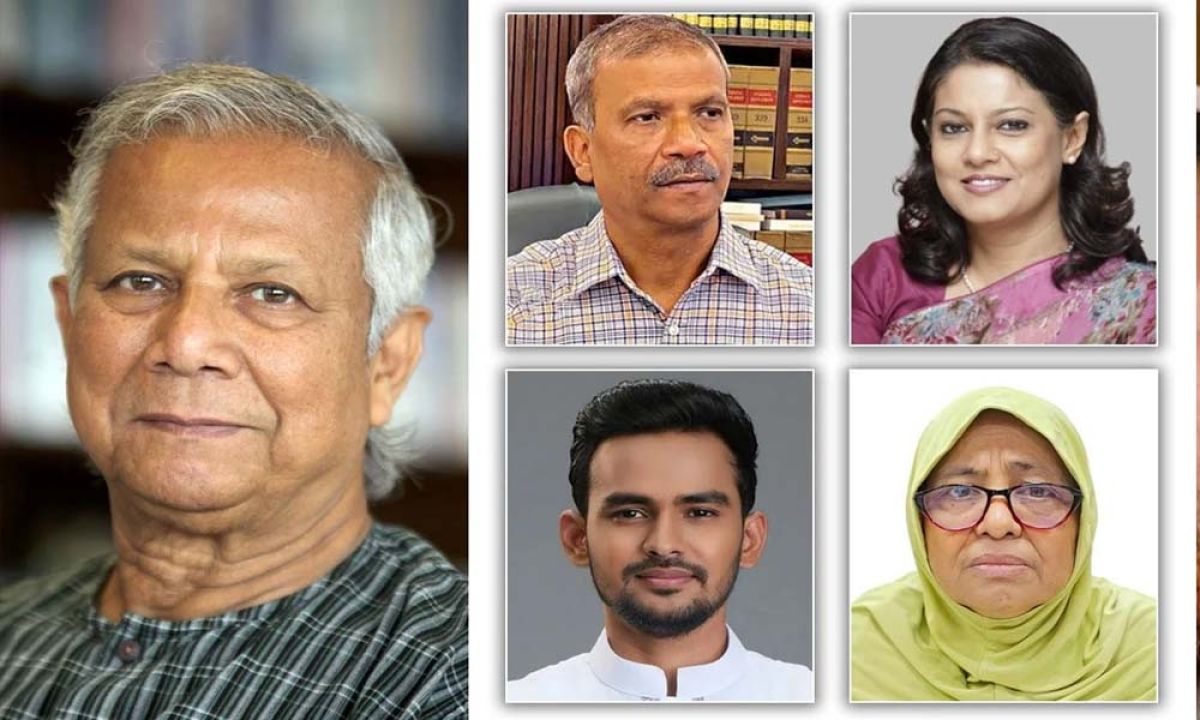
The untold chapters of Dr. Yunus’s one-and-a-half-year rule are gradually beginning to surface. Following the fall of the Awami League government through an unprecedented mass uprising on August 5, '24, the leaders of the Anti-Discrimination Student Movement placed Dr. Yunus in power.
The people of the country hoped that a civil society government led by Dr. Yunus would establish good governance, eliminate discrimination, and build a corruption-free nation. However, Yunus’s one-and-a-half-year tenure turned out to be the worst period of governance in the history of Bangladesh. Instead of good governance, the Yunus government established a reign of arbitrariness and irregularities, and rather than eliminating discrimination, Yunus created new inequalities. But the most terrifying aspect of Yunus’s regime was corruption and looting.
In just one and a half years, the extent of looting committed by Yunus, his advisors, and assistants broke all past records of corruption. Recently, the Anti-Corruption Commission (ACC) was newly reconstituted. Following the formation of the new commission, various corruption allegations are being taken into account, and preliminary investigations are being conducted.
These investigations show that the highest number of corruption complaints have been filed against ministers, advisors, and officials close to Yunus under his government. It has been learned that at least two thousand allegations of corruption committed during the Yunus government's tenure have been submitted to the Anti-Corruption Commission. The ACC is conducting preliminary inquiries to verify the authenticity of these allegations. Meanwhile, the ACC has already initiated an investigation into an allegation of corruption worth 13 thousand crore taka against Asif Mahmud Shojib Bhuyain, a student advisor close to Dr. Yunus.
According to the ACC documents, there are allegations of purchasing land in Portugal, investing in Dubai's "Green Group," and depositing money in Swiss banks using the proceeds of corruption.
As per the allegations, 4,500 crore taka was laundered to Dubai, 3,000 crore to Singapore, 2,000 crore to Australia, and 1,500 crore taka to Switzerland. The total amount laundered across these four countries stands at 11,000 crore taka. There are also allegations of laundering massive sums of money abroad through Asif Mahmud's two brothers-in-law and a nephew.
However, sources close to the ACC revealed that Asif Mahmud is not alone; written complaints of corruption have been lodged against most of the advisors. It is learned that these complaints include allegations of money laundering abroad against the chief advisor himself, along with the majority of advisors and special assistants. There are allegations that while serving as chief advisor, Dr. Yunus illegally laundered over five thousand crore taka to at least four countries, including the United States, France, Switzerland, and Norway.
The allegations state that vast sums of money were illegally invested in institutions owned by Yunus in these countries. Furthermore, a written complaint has been received regarding the deposit of 374 crore Bangladeshi taka into Yunus's personal account in Norway. It states that this money was transferred to Yunus's account from Grameenphone's multinational parent company, Telenor. Notably, Grameenphone, operated by Telenor, received several extra privileges during the Yunus regime.
A dozen complaints involving the laundering of ten thousand crore taka against another advisor of the Yunus government, Asif Nazrul, have been submitted to the ACC. These complaints state that after becoming an advisor, Asif Nazrul embezzled a vast amount of money through corruption and laundered it abroad. Multiple complaints mention that Asif Nazrul pocketed thousands of crores of taka through appointments and transfers of judges, judicial officers, and sub-registrars. Allegations of embezzling money through bail trading and transfer trading have also been raised against this former advisor.
There are allegations that Asif Nazrul opened an account in a Swiss bank. However, the complaints state that this controversial advisor purchased assets under false names in the United States using most of his illegal wealth. Information regarding Asif Nazrul's assets in New York and Florida, USA, is detailed in the written complaints.
Another influential advisor of the Yunus government, Syeda Rizwana Hasan, also faces allegations of corruption amounting to eight thousand crore taka submitted to the ACC. These complaints state that former minister Nasrul Hamid Bipu's vast assets were sold and laundered to Dubai by Rizwana's husband, Abu Bakar Siddique. Additionally, there are allegations that her husband has started operating businesses in Dubai and London using Rizwana's illegally acquired wealth.
ACC sources revealed that a complaint was filed alleging that Nurjahan Begum, another advisor in the Yunus government, purchased a luxury house in New Jersey, USA, in the name of a close relative during her tenure as an advisor.
A responsible official from the ACC stated that complaints have been filed against almost all advisors except one or two. In the one and a half years of the interim government, written complaints involving corruption of at least forty thousand crore taka have been submitted to the ACC against Yunus and his advisors.
An ACC official stated that these allegations will be reviewed, and preliminary inquiries will be conducted for those showing prima facie truth. Formal investigation against Asif Mahmud was launched as preliminary truth was found regarding the allegations against him.
The nation expects the ACC to investigate impartially. But the question among the general public is: how did a government sink into corruption to this extent after assuming responsibility following an unprecedented mass uprising?
To find the answer to this question, one must look into the past history of Bangladesh's civil society. Whenever our civil society has found an opportunity, they have worked to feather their own nests. It can be observed that most civil society leaders in our country run NGOs using foreign money and feel no accountability toward the people of the country. They seized power during One-Eleven but did no good for the people of the country, only changing their own fates. However, the Yunus government has broken all past records in corruption and deception. As time passes, the list of misdeeds committed during the Yunus government's one-and-a-half-year rule continues to grow. The one-and-a-half-year governance under Nobel Peace Laureate Dr. Muhammad Yunus is being regarded as the darkest chapter in the history of Bangladesh. Yunus and his associates have broken all past records in corruption and money laundering. Within a span of one year, the amount of money deposited by Bangladeshis in Swiss banks increased by nearly 41 percent. According to 2025 figures, the amount deposited by Bangladeshis in Swiss banks rose to 834.1 million Swiss francs (the currency of Switzerland), compared to nearly 590 million Swiss francs in 2024.
Thanks to the Anti-Corruption Commission. They have courageously initiated an investigation against Asif Mahmud, who has been identified as one of the patrons of mob terrorism and the most talked-about corrupt figure of this period. The people of the country want a fair investigation into the allegations of corruption and money laundering against all advisors of the Yunus government. Looking at the way the Anti-Corruption Commission is working, we can indeed remain hopeful.
Source: Kaler Kantho Online
https://www.kalerkantho.com/online/opinion/2026/09/14/1738849
198/C, Tejgaon I/A, Dhaka-1208
©Dainik Bangla